
Reception for the People’s Liberation Army anniversary 29.07.2025
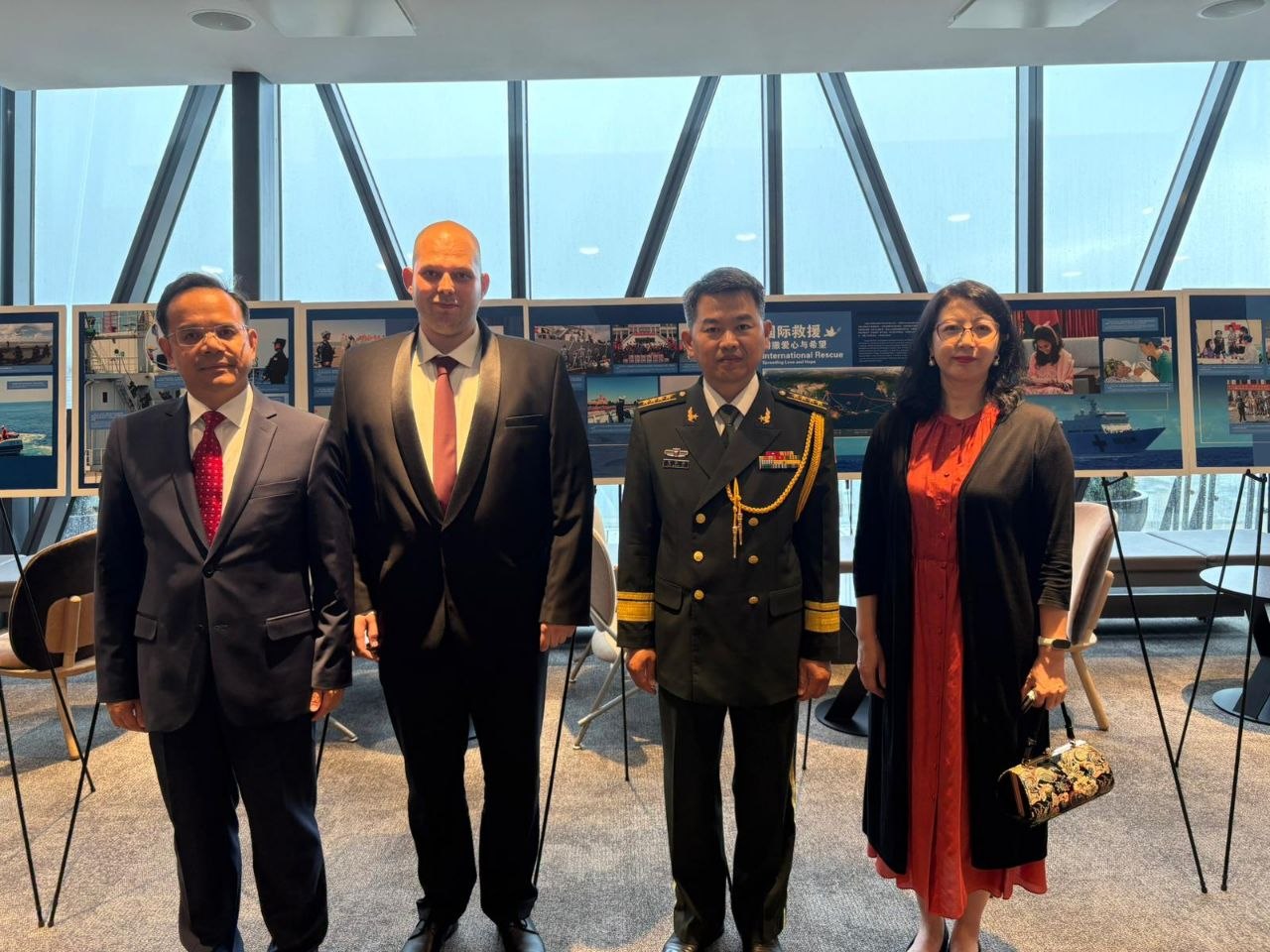
On 29 July 2025, we attended a reception marking the 98th founding anniversary of the Chinese People’s Liberation Army. The reception was hosted by the Chinese Ambassador to Latvia, Tang Songgen. After the official part, meetings followed with Chinese officials and entrepreneurs.
China is not worth ignoring
China is the centre of the world’s textile industry. A large part of the world’s garments and fabrics is made there. You can dislike it. You can see it as the competitor that wrecked Europe’s factories. But you cannot ignore it.
We choose a different attitude. Not to be afraid or to complain, but to understand how China became what it is. Because there is a lesson there that also applies to us.
One town, 700 million sweaters
In one of the conversations, a place came up that stayed with us. Tongxiang.
The Puyuan district of Tongxiang is called the home of knitwear in China. The numbers sound almost unbelievable. Around 700 million sweaters are sold from this single place every year, reaching more than 20 countries. The local knitwear sector’s turnover in 2023 was about 17 billion euros. That is more than some whole countries’ entire textile exports.
And all of this happens on a territory no larger than a single Latvian city. In sixty square kilometres, more than 13 thousand companies operate.
Why clusters win
But the numbers are not the main point. The main point is how it is all organised.
Tongxiang is not one giant factory. It is a cluster. In one place sits everything needed to take a sweater from yarn to shop shelf. Spinning. Knitting. Dyeing. Trimmings. Testing. Logistics. If you need a button, a thread or a dyer, it is not in another country but on the next street.
That gives a speed and a price level that is hard to compete with. Each company does one thing, but does it very well, and right next to it are a hundred others doing the rest. One town focuses on one industry and becomes the best in the world at it.
A lesson for Latvia: focus, not breadth
We do not have 13 thousand companies. And we do not need them. But Tongxiang teaches something else, and it matters.
Strength is not in trying to do everything. For a small country, trying to produce everything from socks to overcoats means being mediocre at everything. Strength is in focus. To find one or a few things Latvia can do really well, and to become the best at them in the region or even in Europe. A small place can become large with one clear choice.
Can Latvia build its own cluster?
We do not claim that another Tongxiang will appear tomorrow in Latgale or Vidzeme. That would not be serious. But the cluster idea is real, and it works in Europe. In northern Portugal, more than 70 percent of the textile sector is packed into a 100 kilometre radius, with technology centres and universities next door to the companies. That is not chaos. It is a system that is deliberately built.
Latvia could start smaller. With a few places that specialise. With shared training, shared equipment and shared standards. The kind of things that are too expensive for a single company but possible for an industry working together.
What is our choice?
That is the main question. What is Latvia’s specialisation? Linen? Technical fabrics? Medical textiles? Small high-quality batches? No single person or single factory can answer that.
That is why we want this conversation to happen across the whole industry. If you have an answer, an opinion or experience to share with us, share it. We can only find Latvia’s specialisation together. And once we have found it, we will know where to put all our energy.