
India’s Republic Day reception at the National Library 26.01.2026
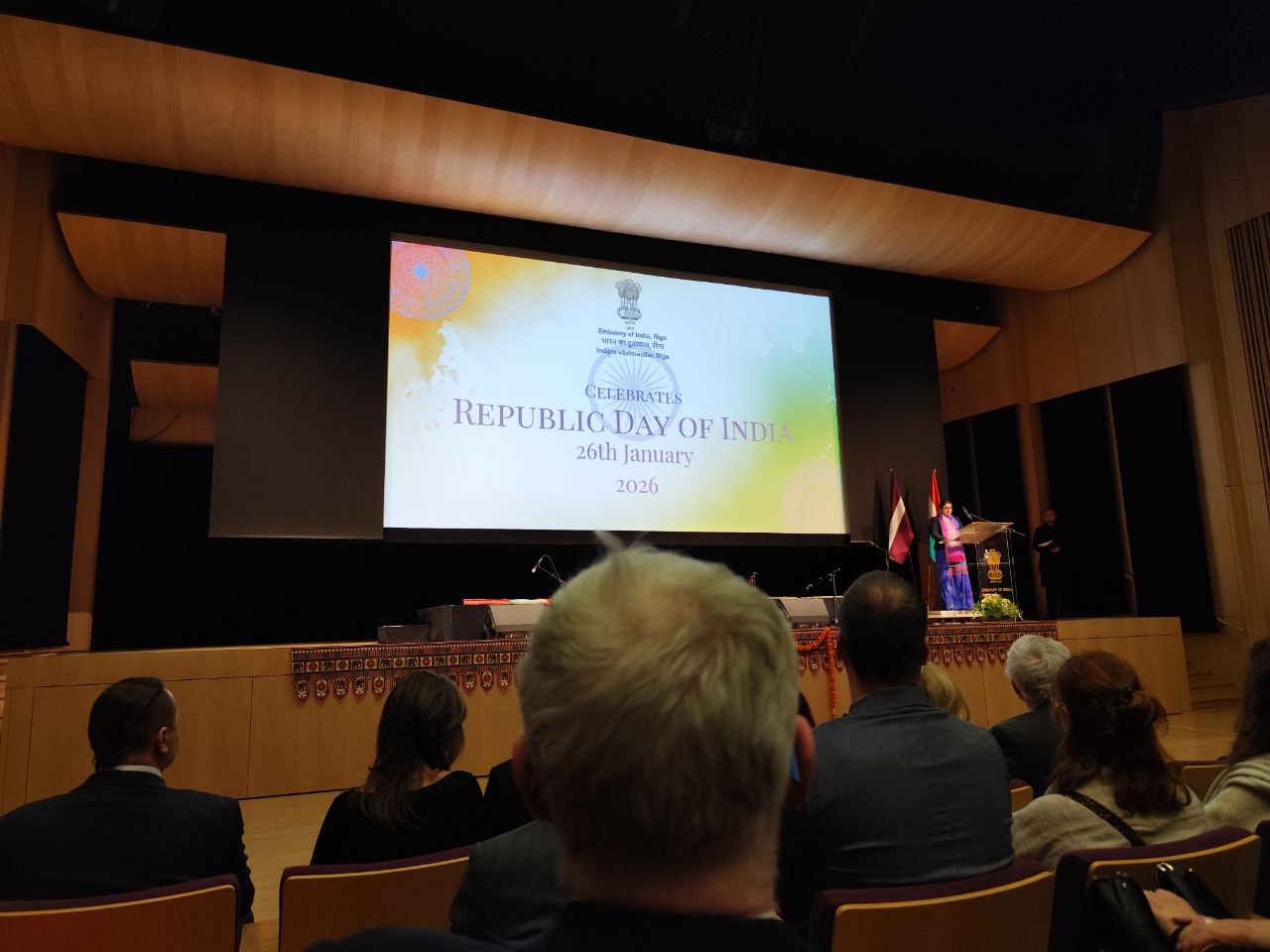
On 26 January 2026, India’s Republic Day reception was held at the National Library of Latvia. We were invited by the Ambassador of India to Latvia, Her Excellency Ms. Namrata S. Kumar. We at the Latvian Textile Industry Association were there.
A room that is a textile map
At a reception like this, representatives of dozens of countries meet in one room. Beyond the protocol and the formal toasts, it is something more. It is a map of the world’s textile industry in a single room. And, if you look closely, that map is being redrawn right now.
A generation ago, textile power was clearly divided. Europe lost, Asia won. Today everything is more complicated. The old giants keep growing, new players appear, and everyone is looking for a way into the same market. Europe.
India: a giant we already know
India is one of the world’s largest textile producers and exporters. A conversation with Indian representatives is always a conversation with a heavyweight of the industry. We do not see that as a threat. For a small country with deep tradition and a culture of quality, there is always room in a large market, if you know what you bring.
This was not our first meeting with India. Already in the autumn of 2025, Ambassador Kumar visited the Daugavpils textile sector. We are building this relationship step by step.
Uzbekistan: a quiet leap few people notice
But the most interesting conversation of the evening was a different one. With the Ambassador of Uzbekistan.
In a textile context, Uzbekistan is rarely talked about in Latvia. That is a pity, because what is happening there is one of the fastest leaps in the world. In 2025, Uzbekistan’s textile exports exceeded 2 billion euros. The country aims to grow them rapidly, exceeding 6 billion euros by 2028, with a significant share aimed directly at the European Union. The sector already employs more than 600 thousand people.
Even more important than the numbers is the change in substance. A few years ago, Uzbekistan exported cotton as a raw material. Today, it processes almost all of its cotton itself, into yarn and finished goods. That is a huge leap in just a few years.
Why this matters for Latvia
The world’s textile power is moving. India is growing. Central Asia is growing. And almost everyone is looking at Europe as a market.
Latvia is small on this map. But we are already inside the European Union, we know European standards, and we know how to work with quality, small batches and demanding orders where what matters is precision, not price. That makes us a possible partner and an entry point, not just a competitor. That is exactly what we look for in conversations like this. Not a one-off deal, but a place in a larger movement.
Diplomacy is the long road
We understand very well that none of these conversations will turn into a contract tomorrow. That is not how it works. In textiles, as in diplomacy, trust accumulates over years.
That is why we come. We arrive, shake hands, get to know people and remember them. A year later, the same person remembers you, and the conversation begins not from zero but from trust. Big doors are not opened by a single phone call. They are opened by years of presence.
We need you at the table
No single company opens these doors alone. That is why we are an association. The more of us, the more seriously we are taken at the table, whether in Riga, Delhi or Tashkent.
If your company is thinking about export or cooperation with Asian markets, become a member or write to us. The next time we sit at such a table, we want to represent you too.